
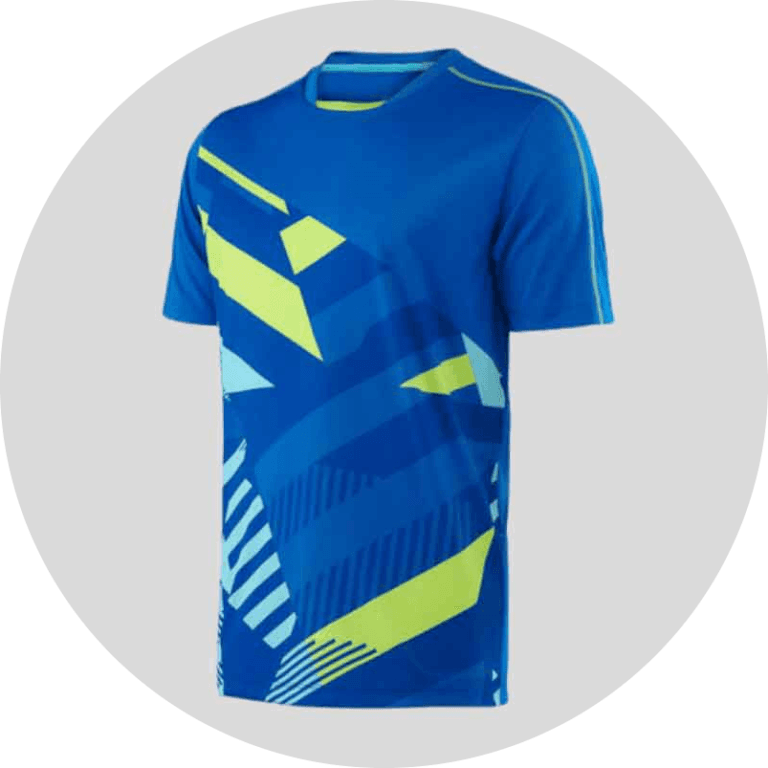
We put designs on garments five ways at our factory: sublimation, screen printing, embroidery, heat transfer and tackle twill. Buyers often ask which one is best. There isn’t a single answer, because each method suits a different fabric, a different kind of design and a different budget.
This guide explains how each one works, what it looks like after a season of wear, and which garments it suits. If you already know what you’re making, the quick table below will probably answer your question.
The short version
| Method | Works on | Good for | Watch for |
|---|---|---|---|
| Sublimation | White or light polyester | Full designs, gradients, names and numbers on jerseys | Doesn’t work on cotton or dark fabric |
| Screen printing | Cotton, poly-cotton, polyester | Logos and simple designs on hoodies and tees | Each color adds cost; can crack on very stretchy fabric |
| Embroidery | Most fabrics | Crests and chest logos | Not for large areas or fine detail |
| Heat transfer | Most fabrics | Names and numbers on non-sublimated garments | Can lift if washed too hot |
| Tackle twill | Knits and mesh | Raised numbers and lettering on baseball, hockey and football jerseys | Heavier, and costs more than print |
How sublimation works
The design is printed onto special paper with sublimation ink. The paper is laid on the fabric and pressed at high heat, and the ink turns to gas and bonds with the polyester fibers. When it cools, the color is inside the fabric rather than sitting on top of it.
That’s why a sublimated jersey feels the same where the print is as where it isn’t. There’s nothing to crack, peel or fade off in the wash, and the number of colors makes no difference to the price. A photo, a gradient or a pattern that runs over the seams all print the same way.
It has two limits. The fabric has to be polyester, or a blend with a high share of polyester, because the ink only bonds with synthetic fibers. And the fabric has to start white or very light, because sublimation ink is transparent. You can’t sublimate white onto a black shirt. To get a black jersey, we print the black.
Most team uniforms we make are sublimated: basketball, soccer, volleyball, rugby, cycling and most of the newer sports. On a sublimated jersey, player names, numbers and sponsor logos cost nothing extra, because they’re part of the same print.
How screen printing works
A screen is a fine mesh stretched on a frame, with a stencil of one color of the design. Ink is pushed through the open parts of the mesh onto the garment. A four-color design needs four screens, printed one after another.
Screen printing works on cotton, poly-cotton and polyester, and on dark fabrics as well as light ones. It’s the usual choice for hoodies, sweatshirts and t-shirts, where the garment color is part of the look and the design is a logo or a few colors.
The ink sits on the surface, so you can feel it. On a soft, stretchy fabric like a compression shirt, a large printed area can crack after many washes. Setting up each screen takes time, so a design with many colors costs more than one with two.
How embroidery works
The design is stitched into the fabric with thread, by machine. A digitizer first turns the artwork into a stitch file, which tells the machine where each stitch goes.
Embroidery lasts longer than any print and looks more formal. It’s what most clubs use for a crest on a polo, a jacket or a cap, and what companies use for a logo on staff wear. The price depends on the size of the design and the number of stitches, not on the number of colors.
It isn’t suited to large areas, small text or photographic detail. A big embroidered design on a light jersey also makes the fabric stiff and heavy in that spot.
How heat transfer works
The design is cut from vinyl, or printed onto a transfer film, and pressed onto the garment with heat. It’s quick to set up, so it suits names and numbers on garments that can’t be sublimated, such as cotton hoodies or dark polyester.
Transfers sit on top of the fabric. Washed inside out in cool water, they last a long time. A hot wash or a hot dryer can make the edges lift.
What tackle twill is
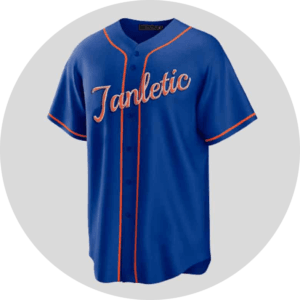
Tackle twill is the traditional look on baseball, ice hockey and American football jerseys. Numbers and letters are cut from a twill fabric and sewn onto the jersey with a zigzag stitch around every edge. Two layers of twill in different colors give the outlined look you see on many pro jerseys.
Twill is raised and textured, and it lasts as long as the jersey. It’s heavier than print, and because every letter is cut and sewn, it costs more and takes a little longer. Teams that want that classic look usually feel it’s worth it.
Mixing methods on one garment
Many of the uniforms we make use two methods. A common setup is a sublimated body, for the colors and the pattern, with tackle twill numbers and lettering sewn on top. Another is a sublimated polo with an embroidered club crest on the chest.
The methods don’t fight each other. Tell us the look you want and we’ll suggest the combination that gets there.
Which method for which garment
| Garment | Usual method | Also works |
|---|---|---|
| Basketball, soccer, volleyball, rugby jerseys | Sublimation | Screen printed numbers |
| Baseball, hockey, football jerseys | Sublimation | Tackle twill numbers and lettering |
| Cycling jerseys and bibs | Sublimation | |
| Hoodies and sweatshirts | Screen printing or embroidery | Sublimation on polyester fleece |
| T-shirts | Screen printing | Sublimation on polyester |
| Polos | Embroidery | Sublimation |
| Leggings, sports bras, rash guards | Sublimation | Heat transfer logos |
| Jackets and tracksuits | Embroidery or screen printing | Sublimation on polyester |
How each method affects the price
We don’t publish fixed prices, because every order depends on the design, the fabric and the quantity. In general:
- Sublimation costs the same however many colors are in the design.
- Screen printing costs more with each extra color.
- Embroidery costs more as the design gets bigger or denser.
- Tackle twill costs more than print, because every piece is cut and sewn.
Send us the design and we’ll price it the way it will be made.
Questions
Does sublimation fade?
Not in normal use. The color is inside the fibers, so washing doesn’t wash it out. Very long exposure to strong sun can dull any dyed fabric over time.
Can you sublimate cotton?
No. Sublimation ink only bonds with polyester. A cotton garment is screen printed or embroidered instead.
Is screen printing cheaper than sublimation?
For a simple one or two color logo on a hoodie or tee, usually. For a full design with many colors, or with names and numbers on every jersey, sublimation often costs less.
Which method lasts longest?
Sublimation and embroidery. Both outlast the garment’s normal life. Screen printing and heat transfer last well if the garment is washed cool and inside out.
Can we have tackle twill and sublimation on the same jersey?
Yes. A sublimated body with twill numbers is one of the most common setups for baseball and hockey.
If you’re not sure which method fits your design, send it to us and we’ll recommend one with your quote. Our fabrics and printing page lists the fabrics we use, and you can see sublimated designs on our basketball uniforms and soccer uniforms pages.
